The past two weeks have brought a lot of changes and some bad news for people who rely on social support in South Africa. I have been watching the news closely because financial security is something many of us struggle with. Between SASSA grants being delayed for some people, the UIF portal that is still broken, and the ongoing debate about the basic income grant, there is a lot to unpack. In this post I will tell you what happened in June 2026 and how it affects you.
SASSA June Grant Payment Dates – Who Got Paid When
First let me give you the good news. SASSA confirmed the June 2026 payment dates and most people got their money on time. Here is how it worked:
- Older Persons Grant – Tuesday 2 June 2026
- Disability Grant – Wednesday 3 June 2026
- Children’s Grants (Child Support, Foster Child, Care Dependency) – Thursday 4 June 2026
- Other categories and grants under review – from 5 June onwards
The agency staggers payments over several days to avoid long queues at banks and cash pay points. I think this is a good system but you need to know your specific date. Do not go earlier – they will not pay you and you will waste transport money.
The grant amounts for 2026 are:
- Old Age Grant (60-74 years) and Disability Grant – R2 400 per month
- Old Age Grant (75 years and older) – R2 420
- War Veterans Grant – R2 420
- Care Dependency Grant – R2 400
- Child Support Grant – R580
- Foster Care Grant – R1 290
- Social Relief of Distress (SRD) Grant – R370
The older persons and disability grants went up by R85 compared to last year. The child support grant only went up by R20 which is very small when you consider how expensive food and school supplies have become.
SASSA Grant Reviews – Why Some People Did Not Get Paid
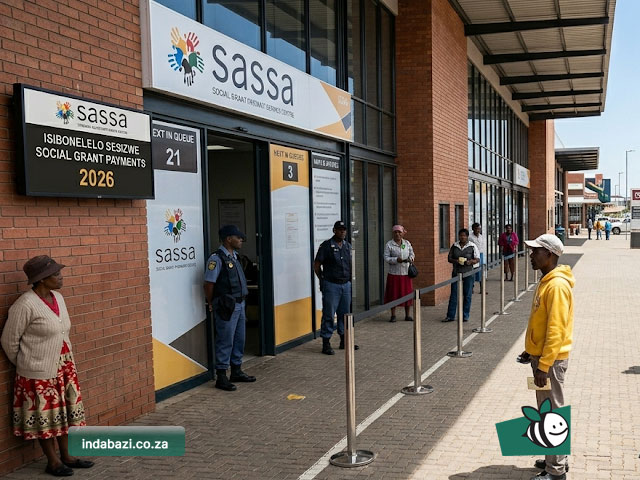
Now for the bad news. In Soweto at the Maponya Mall SASSA office, many beneficiaries complained they did not receive their grants. When people went to ask why, SASSA explained that most of them had been flagged for eligibility reviews but had not responded to the notifications.
I need to explain this clearly. SASSA is required by law to check that beneficiaries still qualify for grants. Your income or circumstances might have changed. If they send you a letter or SMS asking for a review, you must respond. If you do not, your grant can be suspended. Once you go to the office with your ID and documents, they complete the review and pay you the money you missed.
The Soweto local office has already completed 432 grant reviews in the 2026/27 financial year. Many of the people who came to complain had actually been notified but ignored the message. Lungelo Mkamba, the SASSA provincial spokesperson, said “The integrity of the social assistance system has to be maintained for those who need it the most. If you believe your grant may be under review, please visit your nearest SASSA office with your identity document and any relevant supporting documents. Don’t delay”.
So my advice to you is simple. If your grant does not arrive on the expected date, do not just wait. Go to your nearest SASSA office and ask. It could be a simple review that takes ten minutes to fix.
SASSA Fraud Crackdown – R77 Million for Investigations
Here is something interesting. The government is getting serious about fraud in the social grant system. Acting Minister of Social Development Sindisiwe Chikunga announced that R77 million has been set aside specifically for fraud investigations. They are going to intensify grant reviews, strengthen fraud-detection systems, and remove ineligible beneficiaries from the system.
The scale of the social grant system is enormous. Approximately 43 percent of the country’s population – around 27 million people – benefit from social assistance. This includes more than 19 million permanent grant beneficiaries and approximately 7.8 million people who get the SRD grant. The government spends about R22 billion every month on permanent social grants.
SASSA is also planning lifestyle audits for their own officials across grant administration, finance, ICT and procurement. They are cross-referencing beneficiary data with the National Population Register and banks to catch fraudulent payments.
At the same time there is a very worrying scam happening. Some elderly grant beneficiaries have been misled into signing up for funeral policies after being promised food parcels. People claiming to be linked to SASSA convinced pensioners to sign documents, and now deductions of up to R240 are being taken from their grants without their knowledge. SASSA says they cannot refuse to process deductions when a beneficiary has signed a document because that would make them legally liable.
Please be careful. Do not sign anything without reading it first. If someone promises you food parcels or any gift, and then asks you to sign papers, walk away.
Foster Care Organisation Unpaid R1.7 Million by SASSA
This next story is very sad. A Cape Town foster care organisation called Home From Home Trust says SASSA owes it R1.7 million in unpaid grants. The organisation has been forced to cover a R40 000 monthly shortfall while international funding is also drying up. They are struggling to keep children in safe homes because the money is not coming.
This shows that the problems with SASSA payments do not only affect individuals. Even large registered non-profit organisations are waiting months for money they are owed. If you are a foster parent or you run a children’s home, check your payments carefully.
SRD Grant Extended to March 2027 – But Basic Income Grant Still Far Away
The SRD grant of R370 per month has been extended until March 2027 with an additional R36.4 billion allocated. Approximately 7.8 million people receive this grant every month.
But here is the big question – will the SRD grant eventually become a permanent Basic Income Grant? The Department of Social Development says they plan to retable revised basic income grant policy proposals to Cabinet in the second quarter of the 2026/27 financial year, which means between July and September 2026.
However do not hold your breath. The department first submitted a draft basic income support policy to Cabinet in 2024 and it was sent back. They were told to strengthen the policy’s linkages with sustainable livelihoods and economic opportunities. Even if Cabinet approves the revised proposals this year, the department would need to draft legislative amendments, get them through Parliament, formulate regulations, and then adopt them. This process could take longer than a year.
Civil society groups say the R370 SRD grant is an insult. Some are calling for a Basic Income Grant of at least R1 750 per month. R370 cannot even last a month, they argue. I agree with them honestly. R370 is not enough for food and transport in 2026.
One positive development is that the department has been piloting linkages between the SRD grant and economic opportunities together with non-profit organisations Finmark Trust and BRAC International in the Free State, Gauteng and KwaZulu-Natal. Some young people have used their SRD grants to start small businesses. That is good but more needs to be done.
H2: UIF Portal Still Broken – November 2026 Fix Expected
Now let me talk about the Unemployment Insurance Fund or UIF. This affects people who lose their jobs or go on maternity leave.
The UIF portal has been faulty and the acting commissioner Dr Malebo Mabitje-Thompson has said it will only be up and running by November 2026. That is six months from now. The migration to a new IT system has created chaos and a backlog of 3.5 million claims.
Worse still, there is an old outdated UIF website that still appears high up in Google search results. It gives no indication that it is no longer valid. Thousands of unemployed South Africans may be unknowingly submitting claims through this dead website.
The UIF paid R18 billion in benefits during the 2024/25 financial year. Millions of unemployed South Africans rely on these benefits each year. But right now the system is a mess. If you need to claim UIF, be very careful which website you use. I recommend going to a physical Department of Employment and Labour office instead of trying to do it online.
R2.7 Million Property Frozen in UIF-TERS Fraud Case
The Special Investigating Unit (SIU) continues to recover state funds that were stolen through fraudulent UIF Temporary Employer/Employee Relief Scheme (TERS) claims. On 9 June 2026, the Special Tribunal granted a preservation order to freeze a R2.7 million property in KwaZulu-Natal linked to a company called Ziqoqe Construction CC.
The investigation found that the owner Ndabezinhle Luthuli submitted TERS applications for alleged employees and received R9,836,047.06 between 21 July 2020 and 30 September 2024. But he did not pay any of the alleged 673 employees. Some of the employees listed were ghost employees – they did not exist. Several people contacted by investigators denied ever working for the company. The property was purchased in November 2023 using money from these fraudulent transactions.
This kind of fraud is disgusting. Money meant to help workers during the COVID-19 pandemic was stolen. The SIU is doing good work but it is sad that so much money was lost.
Department of Social Development Priorities for 2026
Finally let me give you an update from the Department of Social Development. On 2 June 2026, Acting Minister Sindisiwe Chikunga convened a virtual MINMEC session with provincial MECs to strengthen cooperation and highlight key priorities. She pledged to work collectively with provinces to reduce poverty, protect vulnerable groups and strengthen social protection systems.
The department tabled Budget Vote 19 on 4 June 2026, with the social development budget rising from R412.2 billion in 2025/26 to R466.4 billion in 2028/29. This money supports poverty reduction through social grants, risk benefits through social insurance, welfare services, and empowerment programmes for children, women, youth, the elderly and people with disabilities.
On child protection, the department also led a cross-border meeting with Mozambique on 5 June 2026 to strengthen coordination of social development programmes for vulnerable children in border towns. South Africa is a signatory to the United Nations Convention on the Rights of the Child and the African Charter on the Rights and Welfare of the Child.
Conclusion
Financial security and social support in South Africa is a mixed picture right now. The good news is that most SASSA grants were paid on time in June and the SRD grant has been extended to March 2027 with R36.4 billion allocated. The bad news is that the UIF portal remains broken, some foster care organisations are owed millions, and the Basic Income Grant is still years away.
What should you do? If you are a grant beneficiary, make sure your contact details are correct so you receive review notifications. Respond immediately to any SASSA communication. If your grant is delayed, visit your nearest office. Do not sign anything without reading it. Use official websites only. And if you are applying for UIF, go to a physical office rather than relying on the broken online portal.