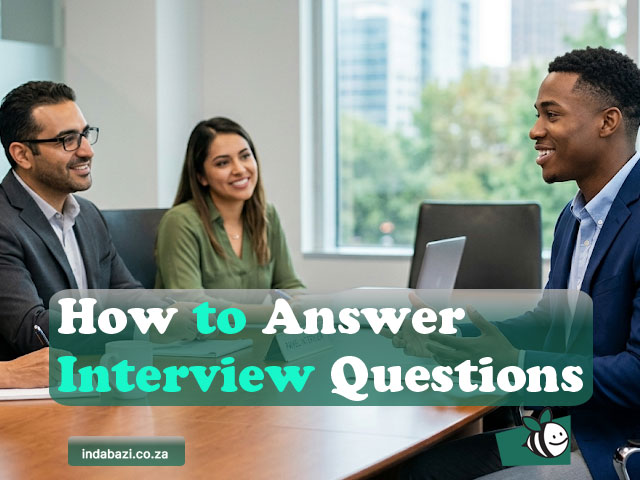
You have applied for fifty jobs. You finally get a call. They want you to come for an interview. Now you are nervous. That is normal. I have been to many interviews and I have also sat on the other side – helping my boss interview people. Let me tell you the truth: most people fail the interview not because they are unqualified, but because they don’t know how to answer the questions properly. In this post I will teach you how to answer common interview questions in a way that works for South African employers in 2026. | Interview Questions South Africa
First, let me give you three rules that apply to every question.
Rule one: Be honest but smart. Do not lie about your experience. But you can frame the truth in a good way. For example if you were fired, you say “the company restructured” – that is honest if it is partly true. But if you stole something, dont lie. They check.
Rule two: Keep your answers short. One to two minutes per question is enough. If you talk for five minutes, they will get bored. I have seen interviews where the person talked so much that the manager interrupted them. That is bad.
Rule three: Always give an example. Do not say “I am hardworking”. Say “At my last job, I stayed late three times to finish a report and the manager thanked me.” Examples make you believable.
Now let me go through the most common interview questions in South Africa and give you good answers.
Question 1: Tell me about yourself.
This is always the first question. Many people start with “I was born in Soweto…” No. Stop. They don’t need your life story. They want to know why you are good for this job.
Good answer: “I have been working in retail for two years at Shoprite. I learned how to handle cash, help customers, and work under pressure. I am looking for a new job where I can grow into a supervisor role. That is why I applied here.”
That answer takes 20 seconds. It tells them your experience, your skills, and your goal.
Question 2: Why do you want to work here?
Do not say “Because I need money”. That is true for everyone but it sounds desperate. Do not say “Because you are a big company” – that is lazy.
Before the interview, go to the company website. Find one thing you like. For example: “I saw that you have a learnership programme for young people. I want to work for a company that invests in its staff.” Or “I shop here myself and the service is always good. I want to be part of that team.”
That shows you did research. It takes five minutes before the interview.
Question 3: What are your strengths?
Pick two or three strengths that matter for the job. For a cashier job: “I am fast with money, I am friendly to customers, and I don’t make mistakes when counting.” Then give an example: “At my last job, my till was never short at the end of the day.”
Do not say “I am perfect” or “I have no weaknesses” – that is arrogant. Which brings us to the next question.
Question 4: What are your weaknesses?
This is a trap. If you say “I am lazy” they won’t hire you. If you say “I work too hard” they think you are lying. The trick is to pick a real weakness that is not fatal to the job, and then say what you are doing to fix it.
Good answer: “I sometimes struggle to speak up in meetings because I am shy. But I am practicing by writing down my ideas before the meeting and saying at least one thing every time.” That is honest and shows improvement.
Question 5: Where do you see yourself in five years?
They want to know if you will stay or leave quickly. Do not say “I want your job” – that sounds aggressive. Do not say “I dont know” – that sounds like you have no plan.
Good answer: “I want to grow into a senior position in this company. Maybe team leader or supervisor. I am willing to learn and take courses to get there.” That shows ambition but respect.
Question 6: Why should we hire you?
This is your chance to sell yourself. Summarise your best points. “You should hire me because I have two years experience in exactly this type of work. I have a good reference from my previous manager. And I live close by so I will never be late.” That last point about living close is smart – employers worry about transport and load shedding delays.
Question 7: Do you have any questions for us?
Always say yes. If you say no, it looks like you don’t care. Ask something like: “What does a typical day look like in this job?” or “What training do you give new staff?” or “What do you enjoy about working here?” That shows interest.
Now let me tell you about a special South African problem: load shedding. Many employers will ask “How will you get to work if there is load shedding and the traffic lights are out?” Or “What if there is no electricity at the office?” You need an answer ready. Say: “I will leave home 30 minutes earlier on load shedding days. I also have a power bank for my phone and I can work with paper forms if the computers are down.” That shows you have thought about it.
One more thing: dress neatly. Not a suit if you don’t have one. Clean trousers, a collared shirt, closed shoes. No caps inside. No gum. Arrive 15 minutes early. Turn off your phone. Look at the person when they speak. Say “thank you” at the end.
I have a story. My cousin went for an interview at a call centre. He was very nervous. He practised the answers I gave him. When they asked “why should we hire you?” he said “Because I speak English and isiZulu, I can type 40 words per minute, and I have never missed a day of work in two years.” He got the job. The manager told him later that the last person said “I need the job” and that was it.
In conclusion, interview questions are not a test of how smart you are. They are a test of how prepared you are. Practise your answers at home. Say them out loud. Ask a friend to pretend to be the interviewer. The more you practise, the less nervous you will be. Good luck.